Creatine: What It Actually Does (and Doesn't)
Creatine is one of the most researched supplements in sports nutrition, and one of the most misunderstood. Here's a clear, clinician's-eye view of how it works and how to use it well.
Key takeaways
- Creatine helps your muscles quickly recycle energy during short, intense efforts like lifting and sprinting.
- 3–5 grams a day, taken consistently, is the most common research-backed approach.
- Creatine monohydrate is the most studied form, and it's still the gold standard.
- Consistency matters far more than timing.
What creatine actually does
Your muscles run on a molecule called ATP. During a heavy set or an all-out sprint, you burn through ATP in seconds. Creatine, stored in your muscles as phosphocreatine, helps regenerate ATP quickly so you can keep producing force a little longer.
Your body makes some creatine on its own, and you get more from foods like red meat and fish. Supplementing simply tops up your muscle stores. When those stores are fuller, research consistently shows creatine supports:
- Strength and power output during high-intensity exercise
- Training volume, meaning an extra rep or two across your sets, which adds up over months
- Lean muscle gains when combined with resistance training
What creatine doesn't do
- It isn't a steroid or a hormone. It's a naturally occurring compound your body already makes and uses every day.
- It doesn't build muscle by itself. The training builds the muscle. Creatine helps you train a little harder, more consistently.
- It isn't instant. At 3–5 grams a day, muscle stores fill over about three to four weeks.
- It isn't a stimulant. No caffeine-style buzz, and it won't keep you up at night.
“In clinic, the most common mistake I see isn’t choosing the wrong product. It’s taking a good one inconsistently. Creatine works best as a daily habit.”Jordan, NP
Monohydrate vs. other forms
You'll see creatine HCl, buffered creatine, creatine ethyl ester and others, often with bigger price tags and bigger promises. So far, these forms haven't consistently outperformed plain creatine monohydrate in research. Monohydrate is the most studied, the most cost-effective, and the form we chose for Kaizen.
How to take it
- Dose: 3–5 grams per day for most adults.
- Timing: whenever you'll remember it. Before or after training both work; what matters is taking it every day, including rest days.
- Loading (optional): some people take about 20 grams a day, split into four doses, for 5–7 days to fill stores faster. It's not required, and some people find it upsets their stomach.
- Mixing: water, a protein shake or your morning smoothie are all fine.
- Hydration: drink water consistently throughout the day, especially in Hawai'i heat.
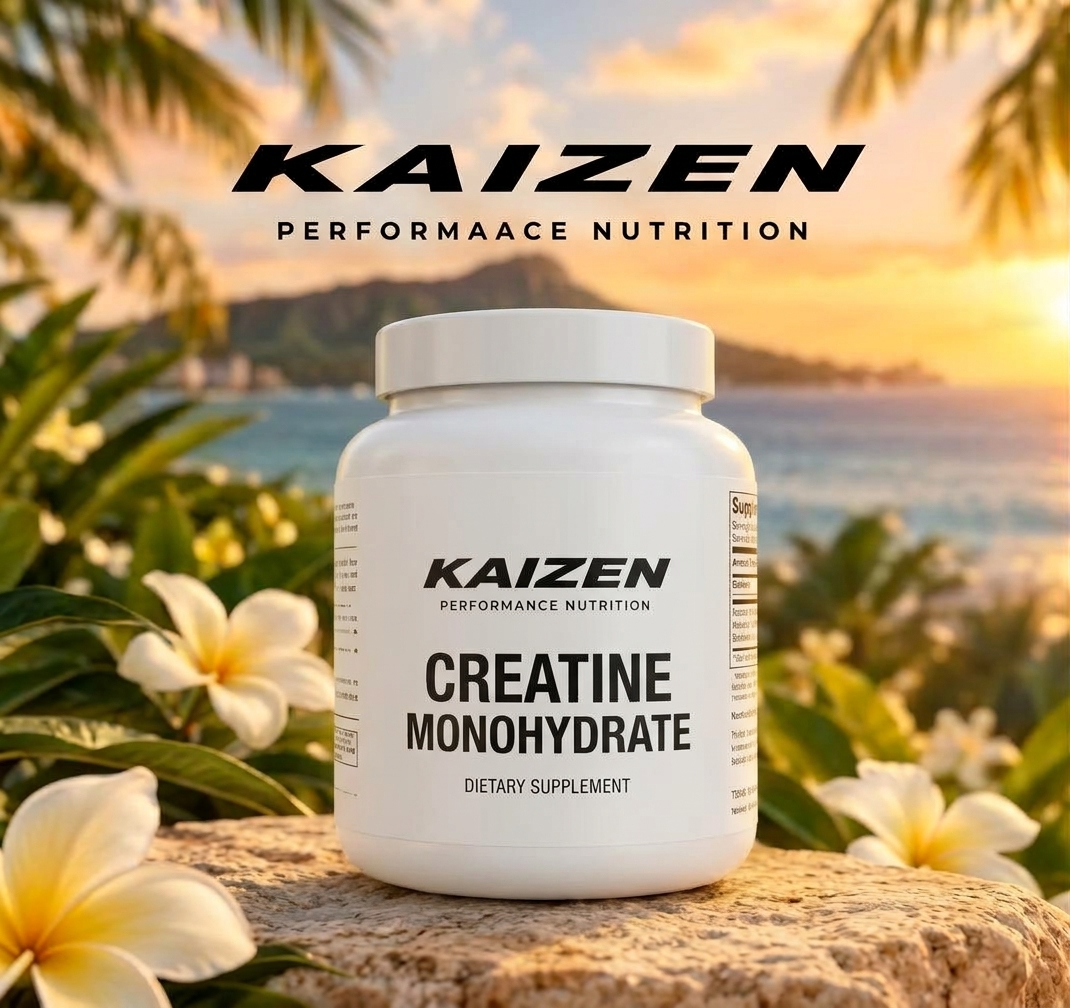
Kaizen Creatine Monohydrate
A single-ingredient creatine monohydrate at 5 grams per serving, with no unnecessary fillers. Formulated by a nurse practitioner and manufactured in an FDA-registered, GMP-certified facility.
Shop Creatine 10% of profits from every order go to Point One Vision, a nonprofit.Common questions
Will creatine make me look bloated?
Creatine pulls water into your muscle cells, so a small bump on the scale (often a pound or a few) in the first few weeks is common. That water is inside the muscle, not puffiness under the skin. For most people it's not visible.
Does creatine cause hair loss?
This concern traces back largely to one small study that measured a hormone (DHT), not actual hair loss, and it hasn't been replicated. If hair loss runs in your family and you're concerned, that's a good conversation to have with your provider.
Is creatine hard on the kidneys?
In healthy adults taking recommended amounts, research hasn't shown kidney harm. One practical tip from the clinic: creatine can raise creatinine, a lab value used to estimate kidney function. Let your provider know you take it before bloodwork, so your results are read in context.
Is it only for bodybuilders?
Not at all. Creatine is used by athletes of all kinds, and researchers are actively studying its role in healthy aging, especially alongside strength training for adults who want to stay strong. That research is promising but still developing.
Check with your provider first if…
- You have kidney or liver disease, or you've been told your kidney function is reduced
- You're pregnant, nursing, or under 18
- You take prescription medications, especially ones that affect the kidneys