Omega-3s Explained: Why Quality Matters
Fish oil is one of the most popular supplements in the world, but labels vary a lot. Here's what omega-3s are, what to look for on the bottle, and how to get the most from them.
Key takeaways
- EPA and DHA are the omega-3s most people take fish oil for.
- Check the combined EPA + DHA per serving, not just the “fish oil” number.
- Freshness and purity matter: quality oil shouldn't smell or taste rancid.
- Take omega-3s with a meal, and give them several weeks of consistent use.
What are omega-3s?
Omega-3s are essential fats, meaning your body needs them but can't make enough on its own. There are three main types:
- ALA, found in plant foods like flax, chia and walnuts
- EPA and DHA, found mainly in fatty fish (and algae, which is where fish get them)
Your body can convert some ALA into EPA and DHA, but only in small amounts. That's why fatty fish, or a quality supplement, is the most direct way to get EPA and DHA.
Why people take them
EPA and DHA are built into the membranes of cells throughout your body. Research supports omega-3s for:
- Heart health, as part of an overall healthy lifestyle
- Brain and eye health, where DHA is a major structural fat
- A healthy inflammatory response, which is why many active people use them as part of their recovery routine
Dietary guidelines generally suggest about two servings of fatty fish (like salmon, sardines or mackerel) per week. Even in Hawai'i, with great fish all around us, many people don't hit that consistently.
How to read a fish oil label
This is where most people get tripped up. A bottle might say “1,000 mg fish oil” on the front, but fish oil contains other fats too. What you want is the EPA and DHA content, listed on the Supplement Facts panel. Here's an example of what to look for:
In this example, you're getting 600 mg of EPA + DHA, not 1,000 mg. Also check the serving size: some products list the amount for two or three softgels, not one.
“Two fish oil bottles can look identical on the front and be completely different on the back. The Supplement Facts panel tells the real story.”Jordan, NP
Why quality matters
Freshness
Omega-3s are delicate fats that can oxidize (go rancid) when exposed to heat, light and air. Oxidized oil is often behind strong fishy burps and an unpleasant smell. A quality softgel should smell mild, not sharp or sour.
Purity
Fish can carry environmental contaminants like heavy metals. Reputable manufacturers source carefully and purify their oil. Look for brands that make in GMP-certified facilities and are open about their testing.
Consistency
The amount on the label should match what's in the softgel, every batch. That's one of the reasons we manufacture in an FDA-registered, GMP-certified facility.
How to take omega-3s
- With food: take them with a meal that contains some fat. This supports absorption and helps reduce aftertaste.
- Every day: omega-3s build up in your cells over time, so consistency over several weeks matters more than any single dose.
- Storage: keep the bottle sealed, away from heat and sunlight. A cool cupboard works; the fridge is fine too.
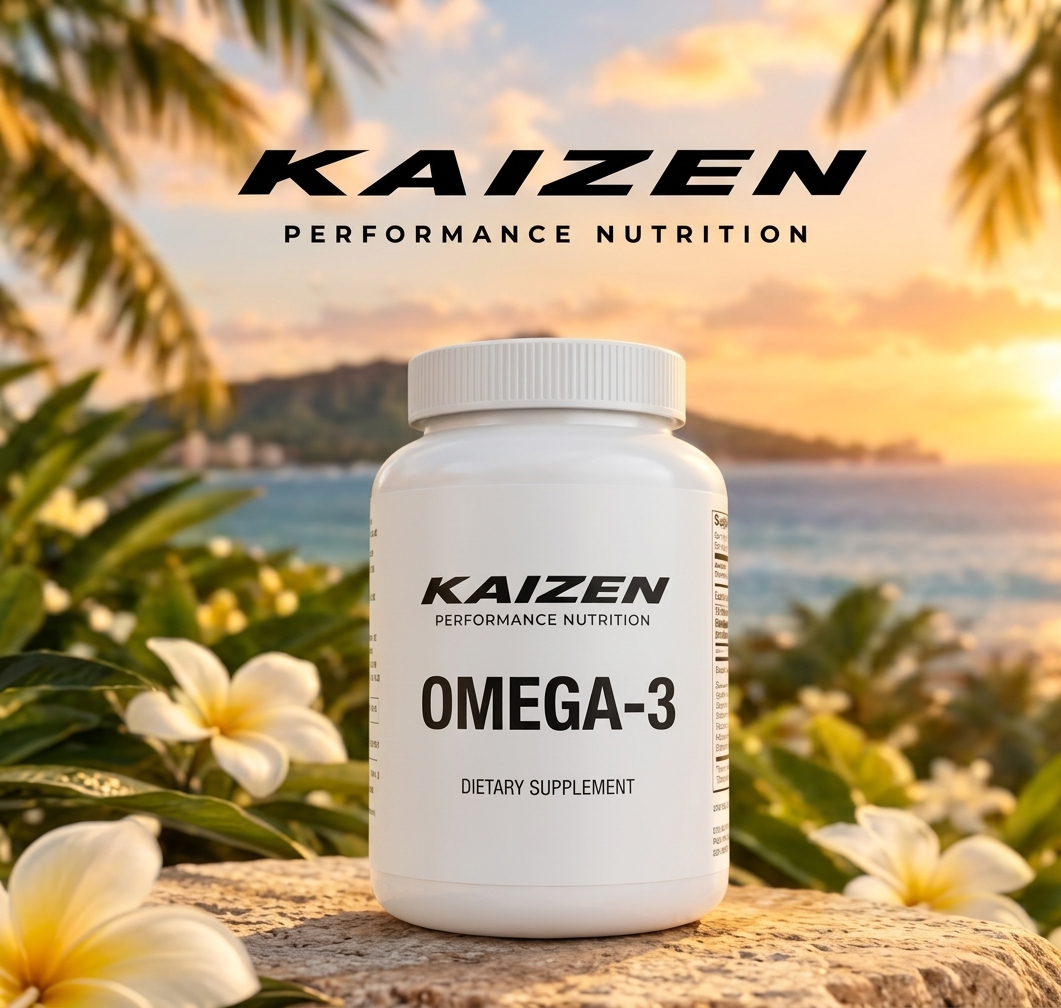
Kaizen Omega-3 Softgels
Formulated by a nurse practitioner and manufactured in an FDA-registered, GMP-certified facility. Check the Supplement Facts on the product page for the exact EPA and DHA per serving.
Shop Omega-3 10% of profits from every order go to Point One Vision, a nonprofit.Common questions
How do I avoid fishy burps?
Take your softgels with a meal, and make sure your oil is fresh. Some people also find it helps to take them at dinner instead of breakfast.
Can I just eat more fish instead?
Absolutely, food first is always a great approach. A supplement is useful when you don't eat fatty fish regularly, or want a consistent daily amount.
Check with your provider first if…
- You take blood thinners or other medications that affect bleeding
- You have an upcoming surgery or procedure
- You have a fish or shellfish allergy
- You're pregnant or nursing, or managing a medical condition